

A practical guide for Oxnard business owners on what California law allows, when the City of Oxnard requires a permit, and where cameras should go on a packing house, dealership, store or office.
What California law says about recording on your Oxnard property
California lets a business record video in public and semi-public areas of its own property: the parking lot, sales floor, warehouse, docks, lobby and hallways. The limits come from privacy law, not from Oxnard specifically. Penal Code section 647(j) makes it a crime to record inside any place where a person has a reasonable expectation of privacy, which means no cameras in restrooms, locker rooms, changing areas or exam rooms. Labor Code section 435 adds a specific ban on audio or video recording of employees in restrooms, locker rooms and rooms designated for changing clothes.
Audio is the bigger trap. California is a two-party consent state under Penal Code section 632, so recording a confidential conversation without everyone's consent can be a crime and can expose you to civil claims. Most business camera systems in Oxnard should have audio recording turned off unless a lawyer has reviewed the setup and signage. Posting clear signs that video surveillance is in use is not strictly required for video, but it strengthens your position and it is a deterrent on its own.
If your business falls under the California Consumer Privacy Act, identifiable video is personal information and belongs in your privacy notice. Keep retention practical and restrict who can export clips.
When the City of Oxnard requires a permit
Installing cameras and low-voltage cable on a commercial building in Oxnard usually does not require a building permit by itself. Permits come into play when the work touches things the city inspects. Adding a new 120-volt circuit for a camera power supply or a network rack requires an electrical permit. Cutting through a fire-rated wall or ceiling to route cable requires a proper fire-stopping method and may be inspected. If cameras are part of a larger tenant improvement, they get folded into that permit set.
Permits, plan checks and inspections run through the City of Oxnard Community Development Department, Building & Engineering Division, at 214 South C Street downtown. Counter hours are limited, so check before you drive over. A licensed C-7 low-voltage contractor should know whether your job needs a permit and pull it when it does. If a contractor tells you nothing ever needs a permit, ask more questions.
- No permit usually needed: cameras, Cat6 cabling, PoE-powered devices on existing circuits, wireless access points.
- Permit usually needed: new dedicated circuits, maglocks tied to fire alarm and egress, penetrations of rated assemblies, exterior structural mounts on some buildings.
- Extra review possible: properties in the coastal zone at Hollywood Beach, Silver Strand, Mandalay Bay and Channel Islands Harbor, and buildings in the Henry T. Oxnard Historic District.
Coastal zone and historic district considerations
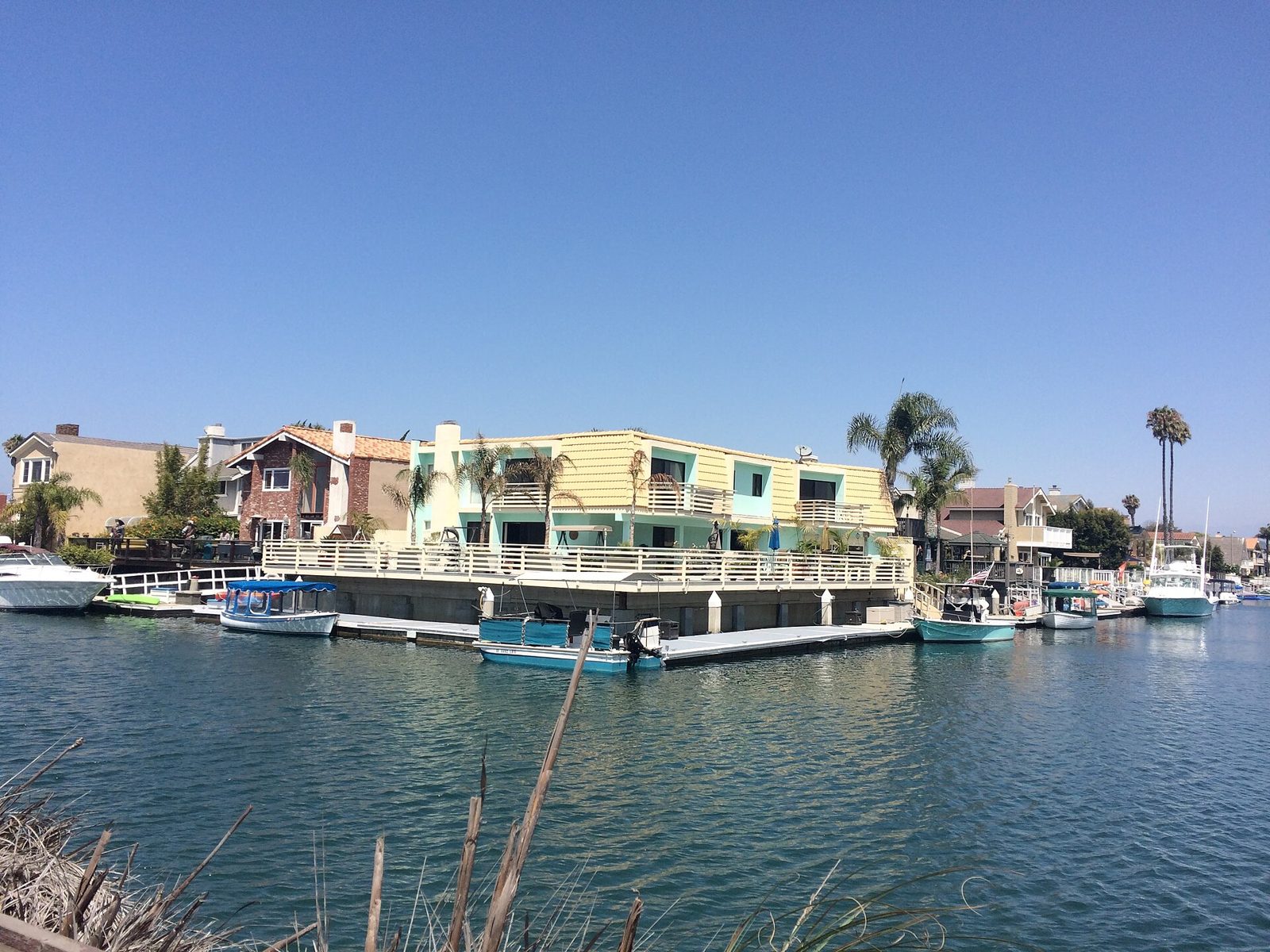
Oxnard's beach and harbor neighborhoods sit inside the California Coastal Zone, and the city administers a Local Coastal Program there. For most camera installs on an existing building this changes nothing, but exterior changes visible from the street or the beach, new poles, or work on a property with prior coastal permit conditions can trigger review. Harbor and beach properties should ask before adding a pole-mounted camera.
Downtown, the Henry T. Oxnard Historic District and Heritage Square have design expectations for exterior changes. Drilling conduit up a historic facade is a bad idea for both the building and the approval process. The usual answer is discreet mounts at the eave or on the rear elevation, cable routed inside, and exterior hardware painted to match.
Where cameras should go on Oxnard's main building types
Oxnard is not a city of office towers. It is packing houses, warehouses, dealership lots, strip centers and apartments, and each has its own high-risk spots.
- Packing houses and cold storage on Rice Avenue, Lombard Street and Camino del Sol: dock doors, product staging, the yard gate, the scale, the forklift charging area, and the pack line. Use washdown-rated housings and stainless hardware.
- Distribution and warehouse buildings at Sakioka Farms Business Park and Del Norte Business Park: every dock position, the truck court, gates with license plate capture, the shipping office and the man-doors employees use.
- Dealerships on Auto Center Drive and Oxnard Boulevard: overlapping views of every row, the freeway-facing fence, the service drive, the key drop and the parts counter.
- Retail and restaurants at The Collection at RiverPark, Esplanade Shopping Center, Saviers Road and downtown: registers, both doors, the stockroom, the alley and the parking lot.
- Apartment communities: gates, carports, mail and package areas, laundry rooms, pool and walkways. Never inside units or facing into windows.
- Medical and dental offices near St. John's Regional Medical Center: entrances, waiting room, pharmacy and supply rooms only.
Mount cameras high enough to avoid tampering but low enough to capture faces, typically nine to twelve feet, and aim them so the sun and headlights do not blind the sensor at the time of day that matters.
Salt air, fog and washdown: hardware that survives Oxnard
Oxnard is coastal and agricultural, and cheap cameras do not last here. Properties within a mile or two of the water, including the port, the harbor and the beach neighborhoods, get salt air that corrodes standard steel mounts and unsealed connectors within a couple of seasons. Use IP66 or IP67 rated housings, stainless or coated mounts, dielectric grease on outdoor connections and sealed junction boxes.
Marine fog is an image problem more than a hardware problem. Cameras with strong low-light performance placed close to what they need to see beat long-zoom cameras across a foggy lot. Inside packing houses and coolers, condensation at door openings fogs lenses, so heated housings and thoughtful placement matter. Daily washdown means conduit and boxes rated for hose-down, not just rain.
Outdoor runs belong in conduit, and any run between buildings or over about 300 feet should be fiber.
Recording versus live monitoring
A recorded system tells you what happened. A monitored system changes what happens. For Oxnard businesses with after-hours exposure, which is most yards, lots, warehouses and construction sites, the difference is real. Live AI camera monitoring uses software to flag a person or vehicle where there should not be one, then a trained operator looks at the feed, speaks to the person over an on-site speaker and calls Oxnard Police if they do not leave.
It costs a fraction of a guard and covers every camera at once instead of one patrol route. ITECH2 offers it from $1 per camera per day a month with the first month free, and it works with most modern IP camera systems. A free on-site site survey is the correct starting point for any Oxnard property in 93030, 93033, 93035 or 93036.
Questions Oxnard businesses ask
Do I have to post a sign if I have security cameras at my Oxnard business?
California does not require a sign for video-only recording in areas without a reasonable expectation of privacy, but posting one is smart. Signs deter theft and support your position that customers and employees had notice. If audio is recorded, notice and consent rules under Penal Code 632 apply, and most Oxnard businesses simply turn audio off. Ask during your free site survey.
Can my Oxnard employer record me at work?
Yes, in work areas like the sales floor, warehouse, docks and offices, as long as there is no reasonable expectation of privacy. Employers cannot record in restrooms, locker rooms or changing areas under Labor Code 435 and Penal Code 647(j), and audio recording of private conversations requires consent. Good employers tell staff where cameras are and why.
How long should an Oxnard business keep security camera footage?
Thirty days is a common minimum, and 60 to 90 days is better for retail, dealerships and packing houses where a problem may not be noticed for weeks. Storage cost depends on camera count and resolution. Set a retention policy, restrict who can view and export footage, and save clips tied to incidents separately. We size recorder storage during the free site survey.
Free site survey in Oxnard
ITECH2 is a licensed C-7 low voltage contractor serving Oxnard since 2010. We will walk your property, tell you what you actually need and quote it in plain numbers — free.
Book a free Oxnard site survey Call or text (805) 232-3088Related: Network Cabling in Oxnard · Fiber Optic Installation in Oxnard · Security Camera Installation in Oxnard · AI Camera Monitoring in Oxnard