
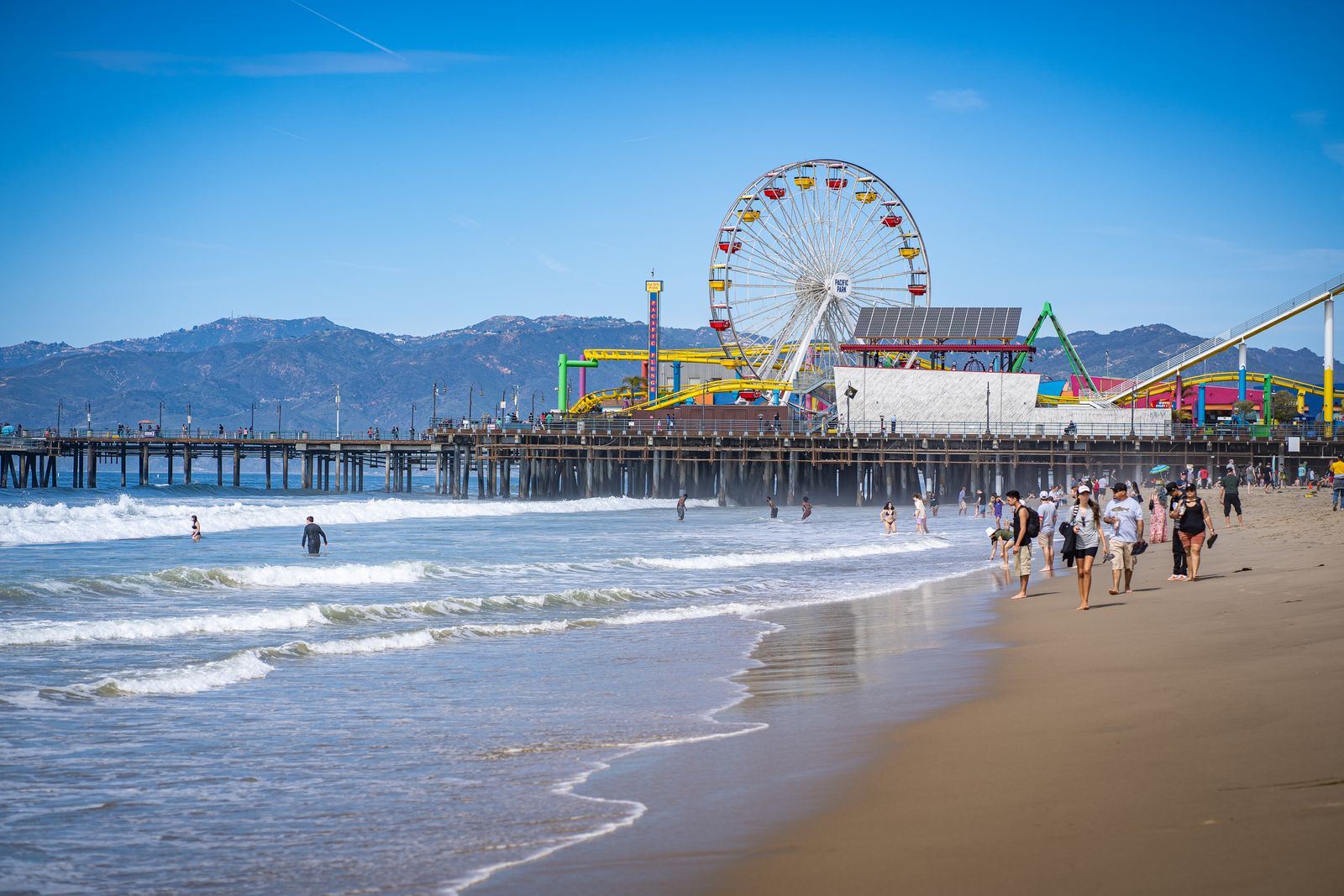

A plain-language guide to installing security cameras at a Santa Monica business: California recording rules, when the city requires a permit, what landlords and HOAs ask for, and where cameras actually pay off.
What California law says about recording video and audio
Video recording on your own commercial property in Santa Monica is legal as long as you stay out of places where people have a reasonable expectation of privacy. That means no cameras in restrooms, locker rooms, changing rooms, or medical exam and treatment rooms. Entrances, sales floors, registers, hallways, stockrooms, garages, lots and alleys are all fair game.
Audio is different. California is a two-party consent state under Penal Code 632, so recording a private conversation without everyone's consent is a crime. For most Santa Monica businesses the safe move is to leave audio recording off, or to record only where clear signage tells people audio is captured and the space is plainly public. We configure systems for video only unless there is a specific, lawful reason to do otherwise.
If your cameras pick up the sidewalk on the Promenade or a neighboring property, that is generally fine, but aim them at your own space and avoid pointing into residential windows. Apartment buildings should keep cameras on common areas and never at unit doors in a way that records who visits a specific tenant more than necessary.
When Santa Monica requires a permit
Installing low-voltage cameras that plug into an existing outlet or run on power over Ethernet usually does not require a building permit on its own. Permits come into play when the job involves new electrical circuits, penetrations through fire-rated walls or floors, structural attachments to a building facade, or exterior changes on buildings that fall under design review or historic rules, which covers much of downtown, Main Street and Ocean Avenue.
Santa Monica handles permits through the Permit Services Center at 1685 Main Street, which is fully electronic: plans are uploaded for review before anyone visits the counter, and the counter is open limited hours Monday through Thursday. Turnaround is faster when the drawings are clean and the scope is clear. A licensed C-7 contractor should know whether your project triggers a permit and handle the filing so you are not guessing.
Tenants in leased space have another layer. Multi-tenant buildings at Colorado Center, the Water Garden and downtown, and managed centers like Santa Monica Place, require landlord approval, certificates of insurance and often a work window before any drilling. HOA boards at condo buildings usually want the same plus a vote. Build that time into your schedule.
Signage, retention and who can see the footage
Santa Monica does not require a specific sign for video-only cameras on private property, but posting a clear notice that the premises are under video surveillance is good practice. It deters most casual theft, reduces the chance of a privacy complaint, and supports your position if footage is ever used in court. Put signs at entrances and in garages.
Decide how long you keep footage and write it down. Thirty days is common for retail and offices; apartment buildings and dealerships often go longer. Employees should know cameras exist and where. Limit who can log in to the system, use individual accounts rather than a shared password, and keep the recorder in a locked closet. If police request footage after an incident, export the clip with the timestamp intact and note who provided it and when.
Where cameras pay off in Santa Monica
The right placement depends on the building type, and Santa Monica has a lot of them.
- Promenade, Main Street and Montana Avenue storefronts: the alley or rear door, the front entrance at face height, the register, and the stockroom. Most break-ins come through the back after 2 a.m.
- Dealerships on Santa Monica Blvd and Lincoln: every drive entrance with plate capture, the fence lines, the service write-up lane, the parts room, the key box, and each level of the inventory deck.
- Offices at the 26th Street campuses and downtown: the suite entry, the server room, and reception. Building management usually covers lobbies and garages.
- Apartment buildings in 90403, 90404 and 90405: the garage gate and ramp, bike storage, mail and package room, lobby, pool deck, and any door tenants prop.
- Medical offices near UCLA Santa Monica and Saint John's: entrances, reception, medication storage, staff entries and parking, and nothing in clinical areas.
Cheap wide-angle cameras mounted too high produce footage of the top of someone's head. Mount entrance cameras at face height, use enough resolution to read a face or a plate at the distance involved, and light the area so night image is usable.
Recording versus live monitoring
A recorded system tells you what happened. It is essential for evidence and disputes, but it does not stop anything while it is happening. For properties that are empty after hours, such as dealership lots, apartment garages, construction sites, loading docks and parking structures, AI camera monitoring adds a live response: software flags a person where nobody should be, a monitoring agent looks at it within seconds, and a loudspeaker on your property tells the person they are being recorded and police are on the way. Most people leave right then.
ITECH2 offers AI camera monitoring in Santa Monica from $1 per camera per day a month with the first month free. It often works with existing cameras, and it costs a fraction of an overnight guard. For a store on the Promenade that has been hit through the alley twice, or a dealership tired of morning walkarounds that find missing wheels, it is the practical next step.
Working with Santa Monica Police and local programs
The Santa Monica Police Department investigates commercial burglaries and vehicle theft across the city and relies on private camera footage to make cases. Clear, timestamped video from a business or apartment building is frequently what identifies a suspect. Keep your system healthy so it is recording when it matters, and know how to export a clip quickly.
Business owners downtown and on the Promenade can also connect with Downtown Santa Monica, Inc., which coordinates ambassador and cleanliness programs, and with the city's business assistance staff for questions about safety and permits. Neighborhood business associations on Main Street, Montana Avenue and Pico share information about incidents, and a working camera system makes your business a better neighbor in that network.
Getting started
Before you buy anything, have someone walk your property who does this every day. A free site survey from ITECH2 covers the entry points, the blind spots, the cable paths, the closet where the recorder will live, whether your existing cameras are worth keeping, and whether the job touches a permit or landlord approval. You get a written scope and a quote for the building you actually have.
ITECH2 is a licensed California C-7 low-voltage contractor, license 1098090, in business since 2010, and serves every Santa Monica ZIP code from 90401 to 90405. Call (866) 904-8787 or email tech@itech2.co to schedule.
Questions Santa Monica businesses ask
Is it legal to record audio on security cameras at my Santa Monica business?
Not without consent. California is a two-party consent state, so recording private conversations without everyone's agreement violates Penal Code 632. Most Santa Monica businesses keep audio off and record video only. If you have a specific need for audio in a clearly public area, post prominent notice and get advice first. We configure systems for video only by default.
Do I need permission from my landlord to install cameras in a leased Santa Monica space?
Almost always. Leases in Santa Monica office buildings, the Promenade, Santa Monica Place and most retail centers require landlord approval for anything attached to the building, plus a certificate of insurance from the contractor. Getting approval up front avoids being told to remove the cameras later. We provide the documentation landlords ask for and handle the scheduling.
How long should a Santa Monica business keep security camera footage?
Thirty days is a common minimum for stores and offices, and it covers most incidents that get reported late. Dealerships, apartment buildings and medical offices often keep 60 to 90 days. Write your retention period into a policy, size the recorder for it, and make sure recording actually continues. We size storage at the free site survey.
Free site survey in Santa Monica
ITECH2 is a licensed C-7 low voltage contractor serving Santa Monica since 2010. We will walk your property, tell you what you actually need and quote it in plain numbers — free.
Book a free Santa Monica site survey Call or text (442) 222-2775Related: Network Cabling in Santa Monica · Fiber Optic Installation in Santa Monica · Security Camera Installation in Santa Monica · AI Camera Monitoring in Santa Monica