
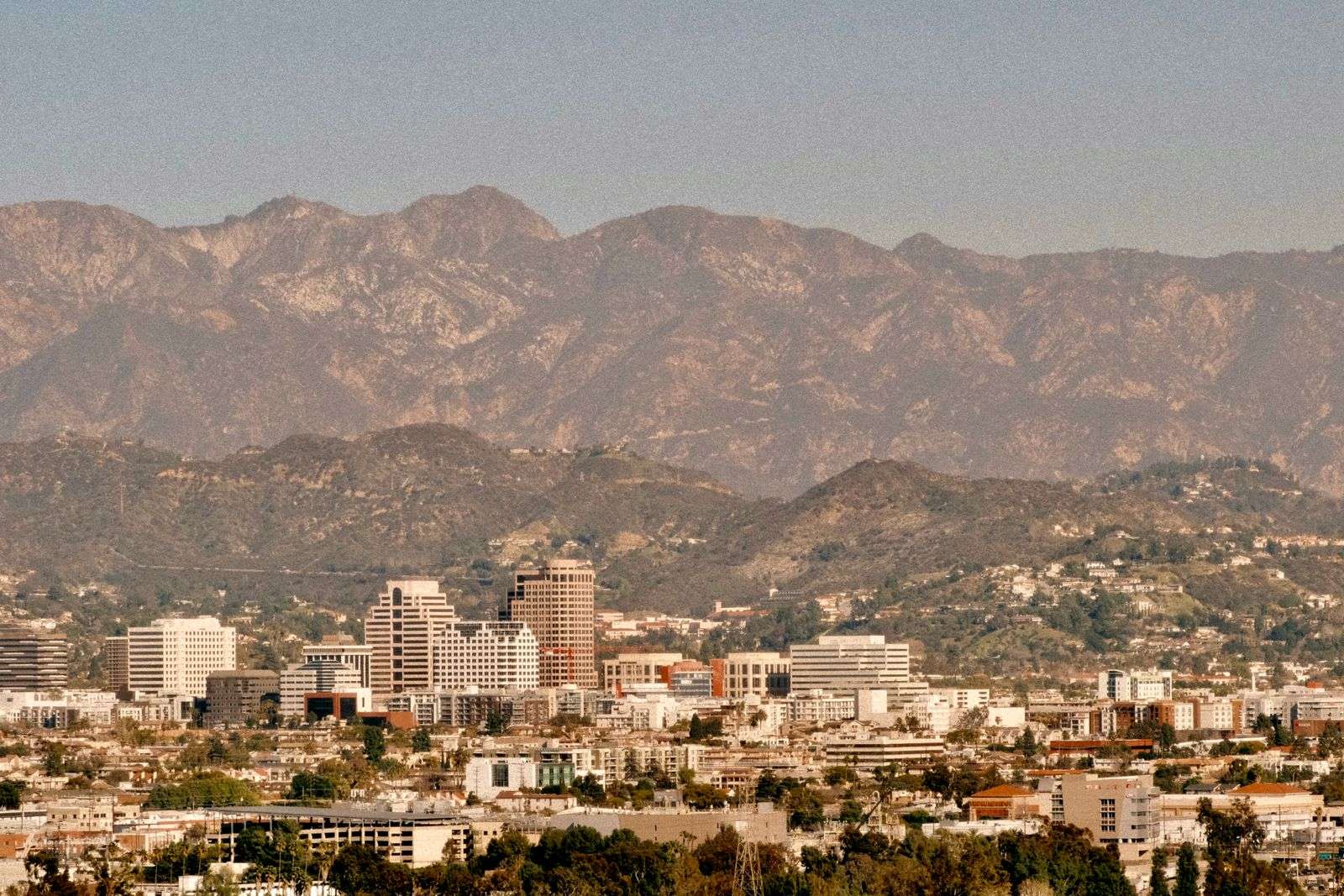

A practical guide for Burbank business owners on what the law allows, when the city wants a permit, where cameras should go in the Media District, Downtown, Magnolia Park and the airport area, and how AI monitoring fits.
What California law says about cameras at a Burbank business
California lets a business record video in places where there is no reasonable expectation of privacy: sales floors, lobbies, hallways, parking lots, loading docks, yards and the exterior of the building. That covers nearly everything a Burbank office, shop, warehouse or dealer lot wants to watch.
The limits are specific. Penal Code section 647(j) makes it a crime to record inside restrooms, locker rooms, changing areas or anywhere a person can expect privacy. Labor Code section 435 bars employers from recording in employee restrooms, locker rooms and changing rooms. Penal Code section 632 is the two-party consent rule for confidential communications, which means audio recording of conversations is a different matter from video. Most Burbank businesses disable audio on cameras or use it only in areas with clear signage, and many skip it entirely.
Employees should be told in writing that video surveillance is in use. A line in the employee handbook and a sign at the entrance handle it. If you serve the public, a visible "video surveillance in use" sign at the door is good practice and often expected by insurers.
When the City of Burbank wants a permit
Permits in Burbank go through the Community Development Department, Building and Safety Division, at 150 North Third Street. Low voltage cabling inside an existing tenant space, including camera cable above the ceiling, usually does not need a separate permit. The city gets involved when the work touches the building or the power.
- New conduit or boxes on the exterior of the building, especially in Downtown Burbank and the Media District where facades are visible from the street.
- Penetrations through fire-rated walls or floors, which is common in older Olive Avenue and Alameda Avenue buildings.
- New electrical circuits or receptacles for a recorder, a rack or a pole-mounted camera in a parking lot.
- Camera and cabling work that is part of a larger tenant improvement already under permit, where the low voltage rides along with the electrical inspection.
- Trenching or underground conduit between buildings or to a gate, which can also involve Public Works.
A licensed and insured low voltage contractor will tell you which bucket your job falls in before it starts. If a bidder says permits never apply, ask more questions.
Landlords, HOAs and studio-adjacent rules
In Burbank the landlord often matters more than the city. Media District office buildings along Olive, Alameda and Riverside Drive commonly require a certificate of insurance, after-hours scheduling for ceiling and riser work, and written approval for anything mounted on the exterior. Downtown landlords on San Fernando Boulevard and at Burbank Town Center have similar rules, plus construction coordination while the center is redeveloped.
Multi-tenant industrial parks near Hollywood Burbank Airport along Empire Avenue and Winona Avenue tend to be more relaxed inside the building but strict about the shared yard and gates. Condominium and mixed-use buildings Downtown have HOA boards that must approve exterior cameras and any change to common areas.
Put the lease and building rules in front of your contractor at the survey. The most common delay on Burbank camera jobs is not the city, it is a property manager who was not asked.
Placement by district: Media District, Downtown, Magnolia Park, the airport area
Media District (ZIP 91505, 91506 and 91502): lobby, elevator lobbies, parking structure entries and ramps, loading dock, and the suite door for production offices and post houses. Interior coverage of edit bays and server rooms is often requested by studio clients as part of their vendor security reviews.
Downtown Burbank (91502): front door with a face-height view, register or reception, back door to the alley, and the parking lot or garage. Restaurants add the bar and the patio. Mixed-use buildings add mailrooms and garage gates.
Magnolia Park (91505, 91506): small shops need four to six cameras done neatly: front door, register, sales floor, stockroom and the alley door. Shared walls and old plaster mean careful cabling.
Northwest Burbank and the airport area (91504, 91505): gates with plate cameras, yard corners with long-range views, every dock door, and the office entrance. Prop houses, rental houses and manufacturers should cover inventory areas inside too.
Hillside, Rancho and residential edges (91501, 91504, 91506): small offices, clinics and churches in these areas mostly need entrances, parking and street-facing views without pointing into neighbors' windows.
Cameras that record versus cameras that are watched
A recorded camera gives you evidence after the fact, which helps with police reports, insurance claims and disputes. It does not stop the person cutting the catalytic converter off a truck in a yard on Ontario Street at 3 a.m.
AI camera monitoring changes that. Software watches your cameras during the hours the property should be empty and flags people and vehicles. A live operator looks at the alert, speaks through a speaker on site, and calls Burbank Police if the person does not leave. Burbank Police respond quickly, but a call with a live description of a person still on the property is far more useful than a report the next morning.
Monitoring from ITECH2 starts at $1 per camera per day per month with the first month free, and the property types that get the most from it in Burbank are dealer lots, industrial yards, construction sites, parking structures and hotel lots.
Retention, access and what to do after an incident
Thirty days of retention is the common target for Burbank businesses, and longer for medical, high-value inventory and public facilities. Size the recorder to that goal at the start rather than discovering it filled up in nine days. Keep logins limited to people who need them, and change them when a manager leaves.
After an incident, export the clip right away with a time stamp and keep the original on the recorder. File a report with the Burbank Police Department online or at 200 North Third Street, and give them the clip and the camera location. For vehicle theft or catalytic converter cases, plate-camera footage at the driveway is what investigators ask for first.
Burbank Police runs Neighborhood Watch and business outreach programs, and registering that you have cameras with them can help when an investigation touches your block.
A short checklist before you buy
Walk the property and mark every entrance, register, dock and gate. Ask for a camera plan drawn on your floor plan, not a count. Confirm which cameras read faces and which read plates. Decide on retention up front. Get the landlord's rules in writing. Ask whether a permit applies and who is pulling it. Decide whether the site needs monitoring after hours or just recording.
ITECH2 is a licensed and insured California low voltage contractor, license, in business since 2010, and the site survey for any Burbank business in 91501, 91502, 91504, 91505 or 91506 is free. Call (626) 999-4929 or email tech@itech2.co.
Questions Burbank businesses ask
Is it legal for my Burbank business to record employees on camera?
Yes, in work areas, sales floors, hallways and parking, as long as you do not record restrooms, locker rooms or changing areas, which Penal Code 647(j) and Labor Code 435 prohibit. Tell employees in writing that cameras are in use. Audio is treated differently under Penal Code 632, so most Burbank businesses disable it. A free site survey maps compliant camera locations.
Does Burbank require a permit for business security cameras?
Usually not for cameras and cabling inside an existing space. The City of Burbank Building and Safety Division does require a permit for exterior conduit, fire-rated wall penetrations, new electrical circuits, underground work, or camera work that is part of a larger permitted tenant improvement. Your licensed contractor should confirm before starting. Free site survey.
Can I point my business cameras at the sidewalk or the neighbor's lot in Burbank?
Public sidewalks and streets are fine, since there is no privacy expectation there. Avoid aiming into a neighbor's windows, yard or private areas, and be careful in mixed-use Downtown buildings where residences sit above retail. Angle exterior cameras at your own entrances, parking and property line. We check sightlines on the free site survey.
Free site survey in Burbank
ITECH2 is a licensed and insured low voltage contractor serving Burbank since 2010. We will walk your property, tell you what you actually need and quote it in plain numbers — free.
Book a free Burbank site survey Call or text (626) 999-4929Related: Network Cabling in Burbank · Fiber Optic Installation in Burbank · Security Camera Installation in Burbank · AI Camera Monitoring in Burbank