
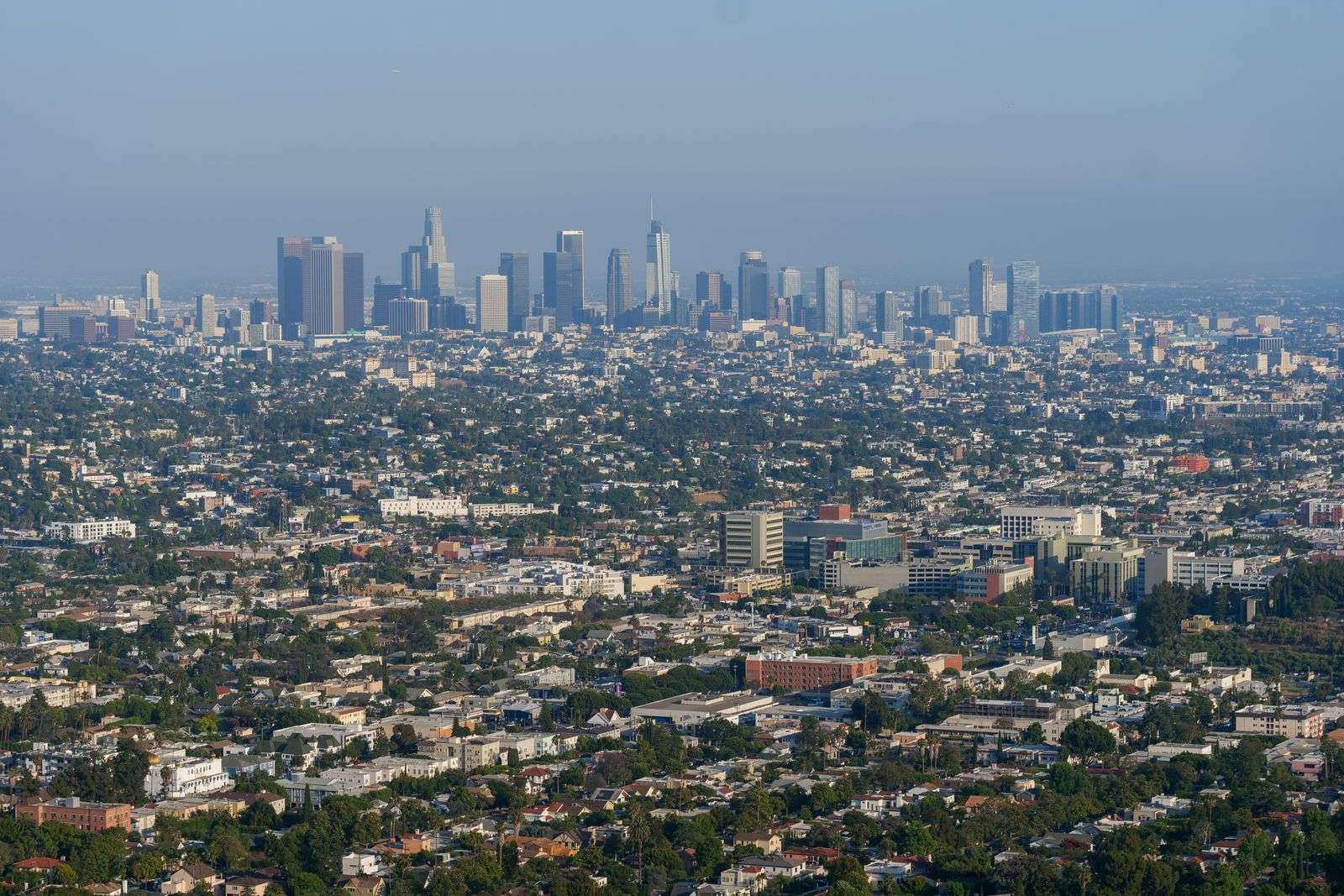

A practical guide for Los Angeles business owners on what California law allows, when LADBS gets involved, and where cameras should actually go on a lot, a storefront or a warehouse.
Why Los Angeles businesses install cameras now
Most owners in Los Angeles do not install cameras because a consultant told them to. They install them after a break-in at the store on Melrose, a catalytic converter theft on the lot on Van Nuys Blvd, a car broken into in the apartment garage in Koreatown, or a landlord asking what they are doing about loitering behind the warehouse on Alameda. By then the old system, if there was one, gave LAPD a blurry shape and a timestamp that was hours off.
A camera system done right answers three questions: who was here, what did they do, and can you identify them or their vehicle. Done wrong it creates legal exposure, annoys the landlord, and still cannot read a plate. This guide covers the rules that apply in Los Angeles, when the city gets involved, and where cameras should actually go.
What California law allows and does not allow
Video recording of areas where there is no reasonable expectation of privacy is legal in California. That covers your sales floor, lobby, parking lot, loading dock, hallways, cash area and stock room. It does not cover restrooms, locker rooms, changing areas or similar spaces. California Labor Code section 435 specifically prohibits employers from recording employees in those areas, and it applies no matter what the camera is pointed at nominally.
Audio is the bigger trap. California is a two-party consent state under Penal Code section 632, which makes it a crime to record a confidential communication without the consent of everyone involved. A camera with a microphone in a back office or break room can put a business on the wrong side of that law. The safe approach for most Los Angeles businesses is to disable audio on cameras or, where audio is genuinely needed, post clear notice that audio and video recording is taking place so there is no expectation of privacy.
Signage is not required by a blanket state rule, but it is recommended. It deters, it supports the position that people entering consented to video monitoring, and it is what an LAPD detective and your insurer expect to see. Point cameras at your own property and public-facing areas, not into a neighbor's windows or a residential unit.
When LADBS gets involved
The Los Angeles Department of Building and Safety handles permits and inspections in the City of Los Angeles, with Development Services Centers Downtown at Figueroa Plaza (201 N. Figueroa St., 90012), in Van Nuys (6262 Van Nuys Blvd, 91401), West LA (1828 Sawtelle Blvd, 90025), South LA (8475 S. Vermont Ave, 90044) and San Pedro (638 S. Beacon St, 90731). Whether your camera project needs a permit depends on what the work touches, not on the cameras themselves.
Typical situations that need attention:
- New line-voltage circuits or outlets for cameras, recorders or poles require an electrical permit pulled by a licensed contractor.
- Penetrations through fire-rated walls, floors or shafts in a mid-rise or tower must be firestopped and are usually inspected as part of a larger tenant improvement.
- Camera poles in a parking lot may need a building permit and, on some properties, planning review.
- Work on designated historic buildings, common in Downtown and Hollywood, can trigger review for exterior conduit and mounts.
- Any door hardware that changes egress, such as maglocks tied to access control, needs review because it affects fire and life safety.
Plain low-voltage camera cabling in a single-story commercial building, run in existing ceilings and terminated at a recorder, typically does not need a permit. A licensed contractor should tell you which category your job falls into before quoting, and pull the permit when one is required.
Landlords, property managers and HOAs
Most Los Angeles businesses lease. Downtown and Century City towers require a certificate of insurance naming the owner, an approved scope, plenum-rated cable above ceilings, and after-hours scheduling through building engineering for coring and freight elevator use. Fashion District and Arts District buildings are often owned by long-time families or small partnerships who want to see exactly where conduit goes on the exterior. Shopping centers on Ventura Blvd or in Koreatown have property management that must approve anything on the lot or the building face.
Apartment buildings add HOA boards and rent-stabilized housing considerations. Cameras in common areas such as garages, lobbies, hallways and laundry rooms are normal and lawful, but boards want a written scope and a plan for who has access to footage. Bringing a clean one-page scope with camera locations, cable paths, and a note on retention and access usually gets approval on the first vote.
Where cameras should actually go in LA
Placement depends on the building type, and Los Angeles has all of them. A storefront on Melrose, Fairfax or Hollywood Blvd needs a face-height camera inside the entrance, a wide shot of the sales floor and registers, and a camera on the rear door and alley, which is where most after-hours entries happen. A dealership on Figueroa Street or Van Nuys Blvd needs pole-mounted coverage of every lot row, plate capture at each exit and the service drive, and cameras inside the service bays and at the key drop.
A warehouse in Chatsworth, Sun Valley or Wilmington needs a camera on every dock door, the yard and truck gate with plate capture, the fence line, and receiving and shipping counters. An apartment building in Koreatown or Palms needs the garage gate and levels, lobby, mail and package area, laundry room and pool. A Downtown office suite needs reception, the server room door and the suite entrance.
Night performance matters more than resolution in most LA lots. A camera that produces a clean image in the daytime and noise at 2 a.m. is not useful. Sensor quality, lens choice for the distance, and lighting are what separate footage LAPD can use from footage that just documents that something happened.
Retention, remote access and monitored cameras
LAPD detectives regularly request footage days or weeks after an incident. Thirty days at full resolution is the practical minimum for most businesses; dealerships, cannabis retailers and warehouses often keep 60 to 90 days. Size the recorder for that from the start and set up remote viewing so you can pull clips from a phone instead of driving to the site.
Recording alone does not stop anything. AI camera monitoring adds live human response: software flags a person or vehicle in a defined zone after hours, an operator reviews it within seconds, speaks through an on-site speaker, and calls LAPD if the person does not leave. For dealership lots, contractor yards, construction sites, retail alleys and apartment garages across Los Angeles, it costs a fraction of a guard and covers every camera at once. ITECH2 offers it from $1 per camera per day a month with the first month free.
A short checklist before you sign anything
Before hiring anyone to install cameras on a Los Angeles business, confirm a few things. The contractor should hold a California Low Voltage Systems license and be able to show insurance your landlord accepts. They should walk the site, at night if it is a lot, and tell you camera by camera what each one will see. They should say clearly whether a permit is needed and who pulls it. They should disable audio or explain the notice you will post. And they should hand you labeled, tested documentation when they leave.
ITECH2 is a licensed contractor based in Commerce, serving all of Los Angeles from San Pedro to Sylmar since 2010. The site survey is free. Call (626) 999-4929 or email tech@itech2.co and we will come look at the building.
Questions Los Angeles businesses ask
Is it legal to record audio on business security cameras in Los Angeles?
Not without consent. California Penal Code 632 is a two-party consent law, so recording a confidential conversation without everyone's consent is a crime. Most Los Angeles businesses should disable microphones on cameras or post clear signs that audio and video recording is in progress, so there is no expectation of privacy. Video alone in public-facing areas is fine. We configure systems that way by default.
Does a Los Angeles business need an LADBS permit to install security cameras?
Usually not for the cameras and low-voltage cabling alone. A permit becomes necessary when the work adds line-voltage circuits, penetrates fire-rated assemblies in a tower, installs camera poles in a lot, modifies a historic building exterior, or changes door egress with access control. A licensed contractor should confirm which applies before quoting and pull the permit when needed.
How long should a Los Angeles business keep security camera footage?
At least 30 days at full resolution. LAPD often requests video well after an incident, and insurers may ask later still. Dealerships, cannabis retailers, warehouses and apartment garages commonly keep 60 to 90 days. Size the recorder for the retention you want, set up remote access, and check periodically that it is actually recording. We spec retention on the free site survey.
Free site survey in Los Angeles
ITECH2 is a licensed and insured low voltage contractor serving Los Angeles since 2010. We will walk your property, tell you what you actually need and quote it in plain numbers — free.
Book a free Los Angeles site survey Call or text (626) 999-4929Related: Network Cabling in Los Angeles · Fiber Optic Installation in Los Angeles · Security Camera Installation in Los Angeles · AI Camera Monitoring in Los Angeles